Wisdom Teeth Removal
Understanding Wisdom Teeth Removal
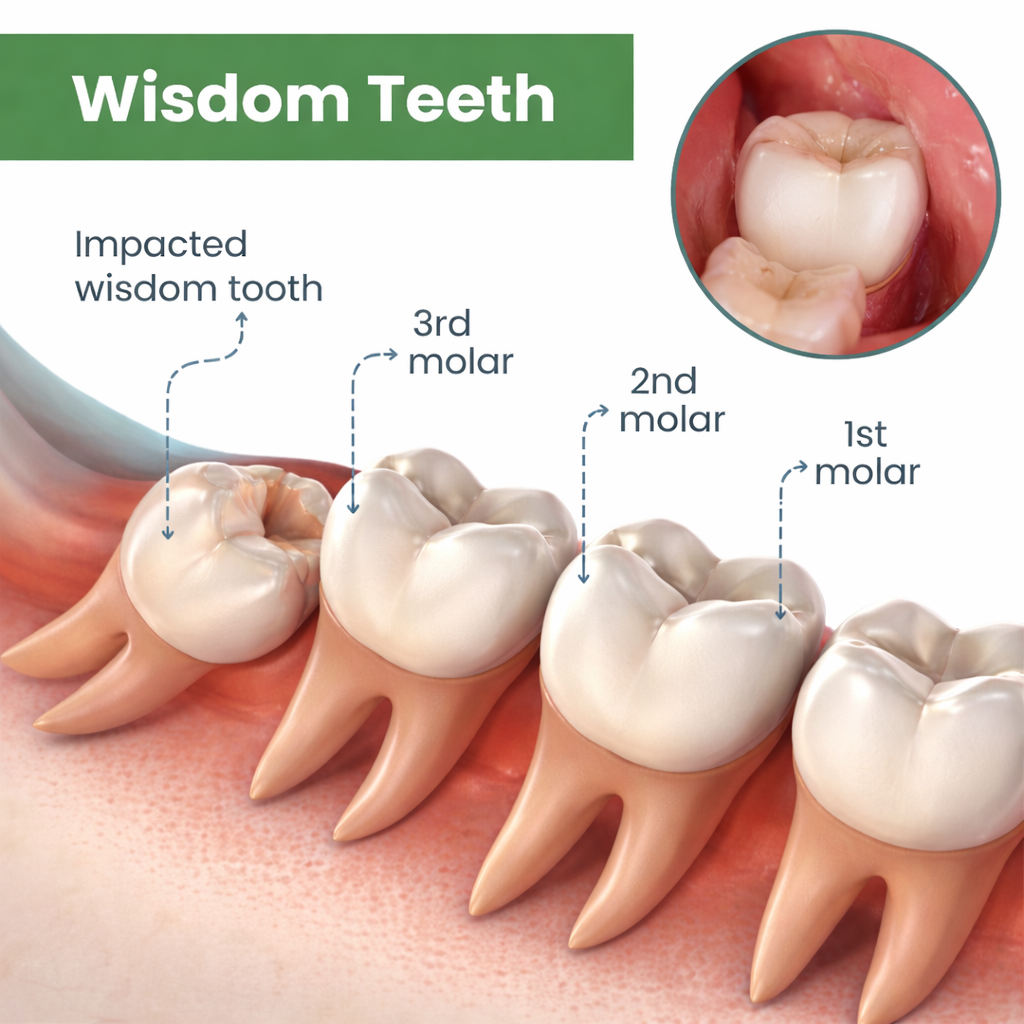
Wisdom teeth removal is a common oral surgery to extract the third set of molars, which typically emerge in the late teens or early twenties. Because these are the last teeth to erupt, the jaw often lacks sufficient space to accommodate them, leading to impaction—where the teeth remain trapped under the gum or grow at an awkward angle. If left untreated, impacted wisdom teeth can cause intense pain, damage to neighboring teeth, cysts, and persistent infections. Removing them is a preventive measure to ensure the long-term health and alignment of your entire smile.
How Wisdom Teeth Removal is Treated
The procedure is a standard surgical treatment tailored to the position of the teeth and the patient's comfort level:
Sedation and Numbing: To ensure a painless experience, the dentist or oral surgeon administers local anesthesia to numb the area. Depending on the complexity, "laughing gas" (nitrous oxide) or IV sedation may also be used to help the patient relax.
The Extraction: For impacted teeth, the surgeon makes a small incision in the gum tissue to expose the tooth and bone. In some cases, the tooth is divided into smaller sections to make it easier and safer to remove through the narrow opening.
Cleaning and Stitching: Once the tooth is out, the site is thoroughly cleaned of any debris. The surgeon may place dissolvable stitches to close the gum and promote faster healing.
Recovery and Aftercare: After the procedure, patients are given specific instructions to manage swelling and protect the blood clot that forms in the socket (essential for healing). This includes eating soft foods, avoiding straws, and gentle saltwater rinses.