Teeth Whitening
Understanding Teeth Whitening
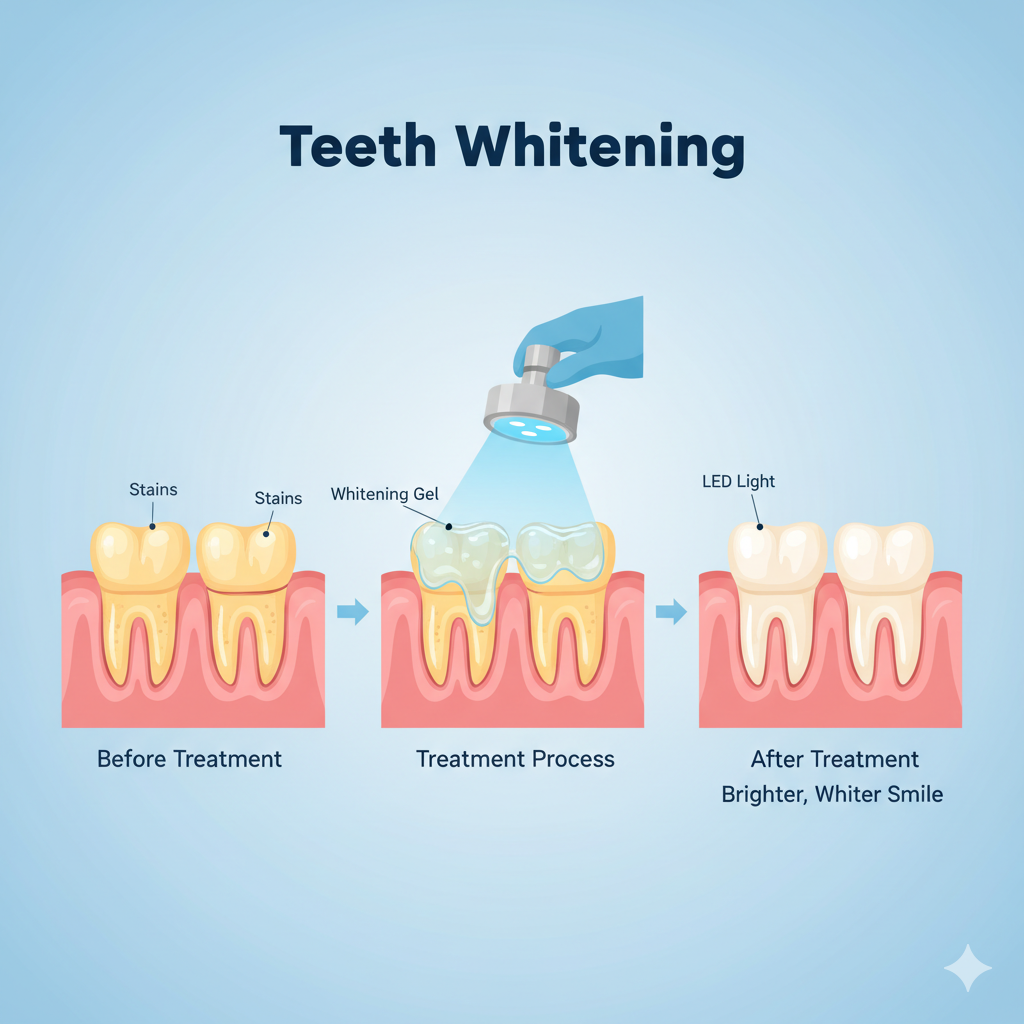
Teeth whitening is a popular cosmetic dental procedure designed to lighten the natural color of your teeth and remove stains or discoloration. Over time, factors like aging, smoking, and the consumption of dark-colored beverages (such as coffee, tea, or red wine) can cause the tooth enamel to yellow or become dull. Whitening treatments work by using specialized bleaching agents—typically hydrogen peroxide or carbamide peroxide—that penetrate the porous enamel to break down deep-seated stains, resulting in a significantly brighter and more youthful smile.
How Teeth Whitening is Treated
Depending on your goals and the level of staining, dentists generally offer two main professional approaches:
In-Office (Chairside) Whitening: This is the fastest method, often taking just one hour. The dentist applies a high-concentration whitening gel to the teeth, which is then activated by a specialized laser or LED light to accelerate the bleaching process. This provides immediate, dramatic results.
Professional At-Home Kits: Your dentist creates custom-fitted plastic trays based on impressions of your teeth. You are provided with a professional-grade whitening gel to use at home for a set amount of time each day, usually over two weeks. This allows for a gradual and convenient brightening process.
Internal Bleaching: For teeth that have darkened after a root canal, the whitening agent is placed inside the tooth structure for several days to lighten it from the center outward.
Gingival Protection: During professional treatment, a protective barrier or "gum shield" is always applied to the soft tissues to prevent irritation from the bleaching chemicals, a safety step often missing in over-the-counter kits.