Kids Dentistry
Understanding Kids Dentistry
Kids dentistry, formally known as pediatric dentistry, is a specialized field focused on the oral health of children from infancy through their teenage years. Because children’s mouths are constantly growing, they require a unique approach that addresses the development of "baby" (primary) teeth and the eventual transition to permanent adult teeth. Beyond physical treatment, pediatric dentistry emphasizes child psychology and behavioral guidance, ensuring that young patients feel safe and comfortable. This early care is critical, as baby teeth act as essential placeholders for adult teeth and play a vital role in speech development and nutrition.
How Kids Dentistry is Treated
Treatments for children are designed to be minimally invasive and highly focused on prevention to avoid complex procedures later in life:
Preventive Cleanings & Exams: Regular check-ups include gentle cleaning to remove plaque and monitoring the jaw’s growth to catch alignment issues early.
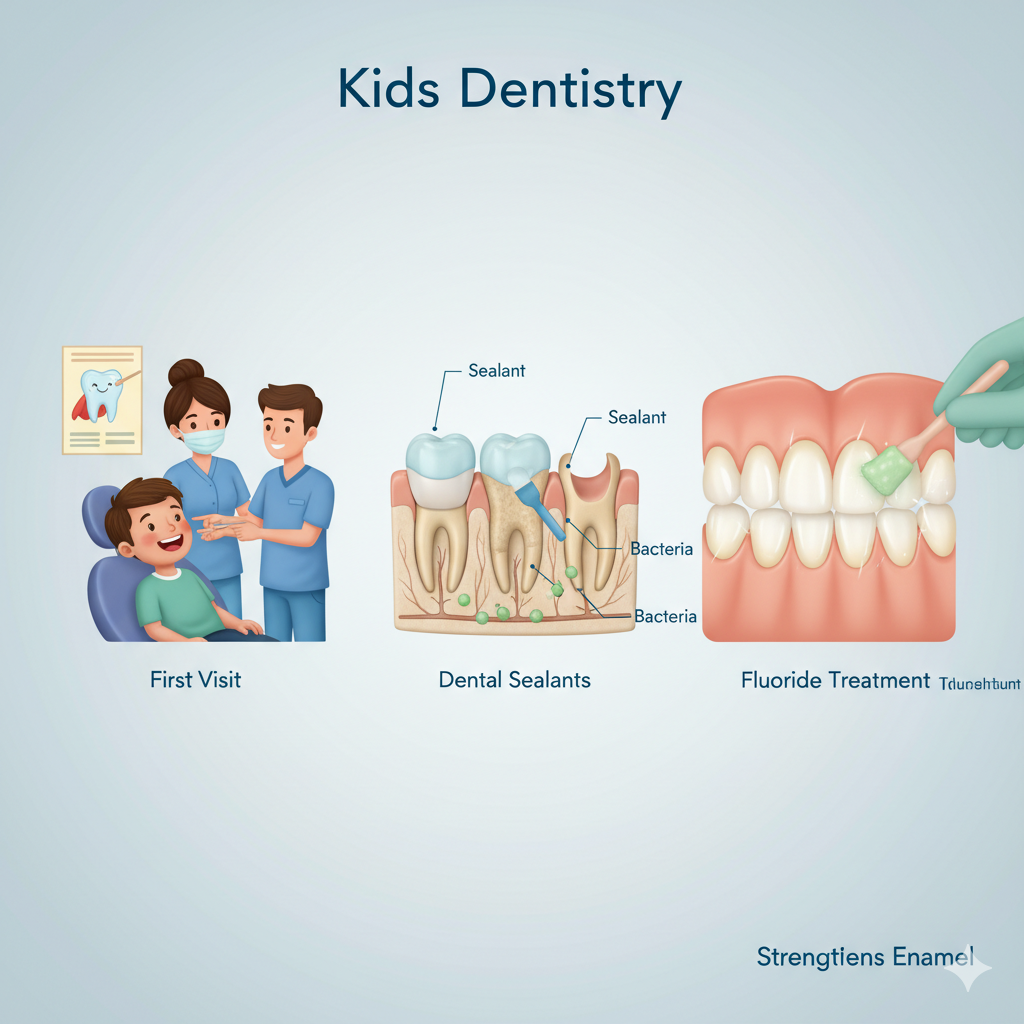
Fluoride Treatments: A concentrated fluoride gel or varnish is applied to the teeth to strengthen the enamel and make it more resistant to the acid that causes cavities.
Dental Sealants: These are thin, protective plastic coatings applied to the chewing surfaces of the back molars. They "seal out" food and bacteria from deep grooves where most childhood cavities start.
Space Maintainers: If a baby tooth is lost too early due to decay or injury, a small metal device is used to keep the space open so the surrounding teeth don't shift and block the permanent tooth from erupting.
Pulp Therapy (Baby Root Canals): If a cavity reaches the nerve of a baby tooth, dentists perform a simplified version of a root canal to save the tooth rather than extracting it.
Behavioral Management: Using techniques like "Tell-Show-Do," dentists explain tools and procedures in non-scary ways to build trust and reduce dental anxiety.